Inclusive Communication is Everybody’s Responsibility
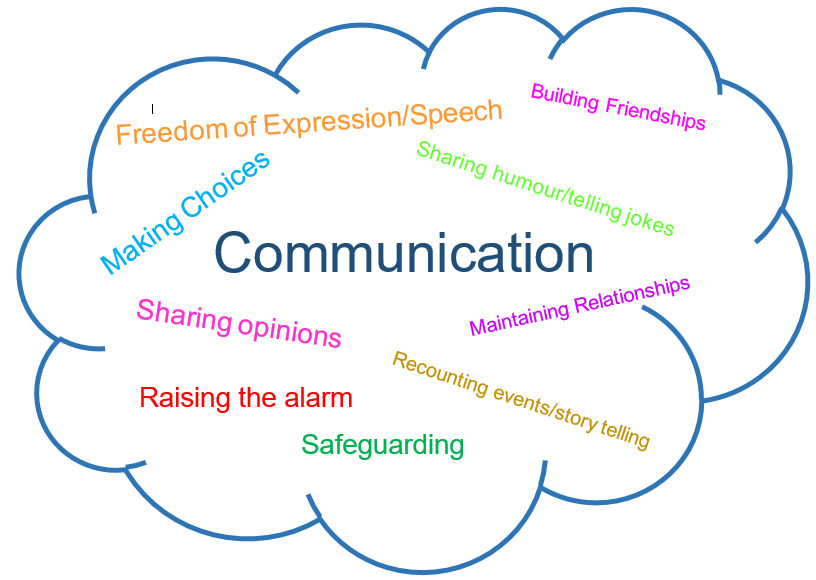
Communication is a Human Right
What is an inclusive communication environment?
This is a place that allows as many people to communicate successfully as possible. For example:
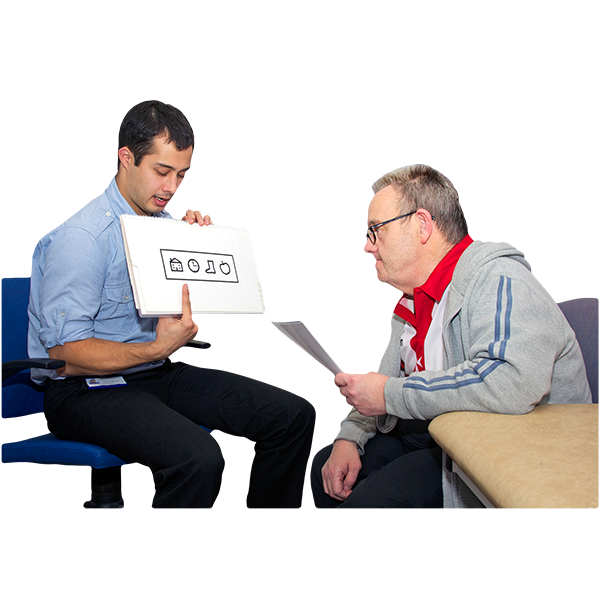
Displaying signs and symbols to improve understanding and navigation
High contrast signs for people with impaired vision
Installing loop systems for people with impaired hearing
Displaying signs in different languages
Staff being able to use signing to communicate
Provision of information in an easy-read format
How we communicate:
Speech
Gesture
Signing
Facial expression
Intonation
Written word
Symbols
Improved communication means:
• Reduced anxiety. • Increased understanding of unusual circumstance such as medical appointments or procedures, or a change in a routine. • Increased attendance to and compliance at appointments. • Greater success in completion of medical procedures. • Reassurance. • Improved mental health. • Improved physical health. • Overall improved welfare.
How we can help:
Speech and Language Therapists identify unmet communication needs, and establish the most appropriate communication method for each person. We develop bespoke resources to support the individual’s communication requirements.
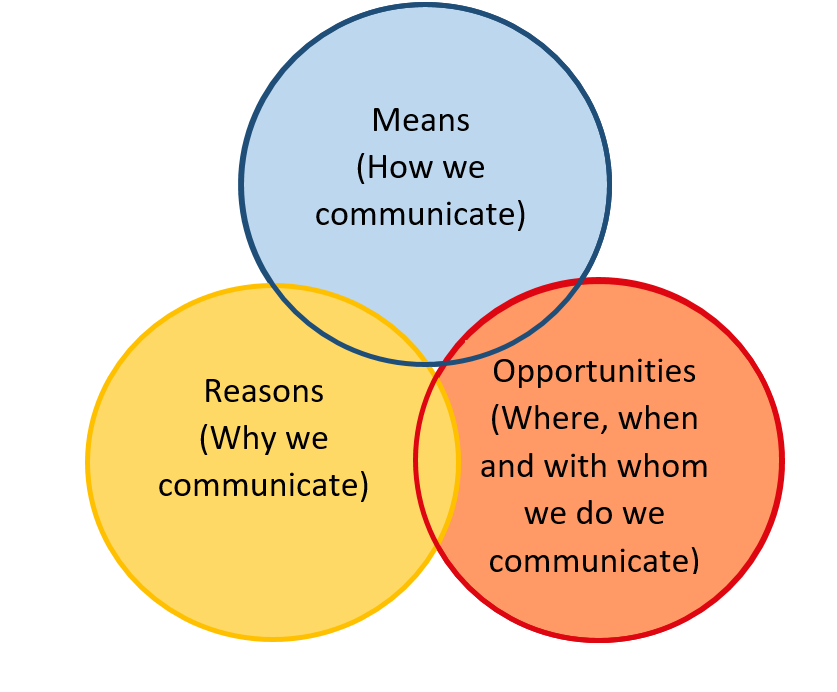
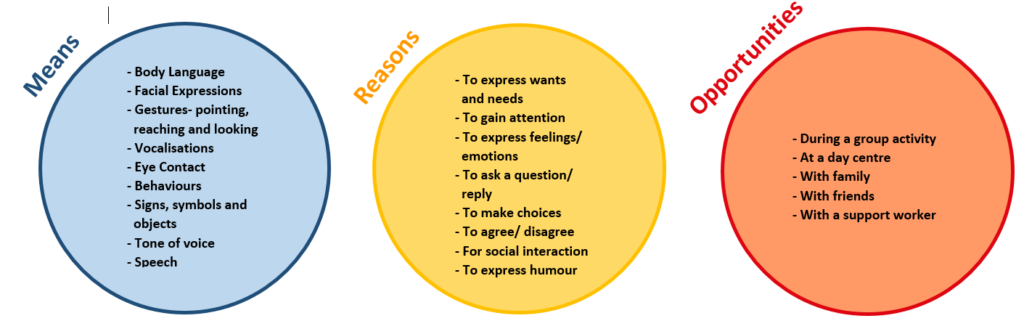
Means, Reasons and Opportunities
• The Means, Reasons and Opportunities model outlines how, when and why we communicate. This model can help communication partners to better understand individuals with communication difficulties.
• All three are needed for functional communication. A breakdown can occur at any level, which can result in people not being able to express themselves, or they may communicate in a way which challenges others.