
Augmentative and Alternative Communication
(AAC)
Augmentative and Alternative Communication or AAC is an approach that helps people to communicate or to communicate more clearly and easily.
AAC helps someone to communicate to the best of their ability in as many situations at possible.
AAC includes both high-tech computer based systems and low-tech systems such as symbols, objects and signing.
Please see below for some examples of AAC
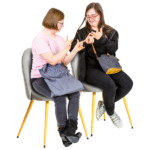
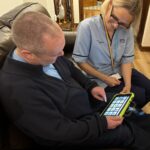

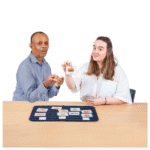
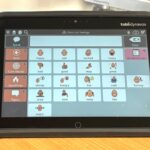
Low-Tech AAC
High Tech AAC
- Low-tech AAC refers to simple paper based tools that support individuals with communication difficulties to express themselves, and understand others.
- Low-tech AAC can include picture boards, visual timetables, PIXON boards, communication books and e-Tran frames.
- Low-tech AAC can be as simple as a piece of paper and a pen, or communication books can be made up of many pages of symbols.
- Low-tech AAC can be made of symbols, photographs, written words, objects or a combination.
- Low-tech AAC can be very beneficial to use alongside High Tech AAC – high tech AAC will not always be available, e.g. in the pool.
- Low-tech AAC is portable, easily adapted and affordable for those who require them to communicate.
- Low-tech AAC will always be adapted to the client to ensure it is effective and useful for them.
- Low-tech AAC relies on a communication partner to assist with preparing the visual aids, and providing a reason and opportunity for communication to take place.
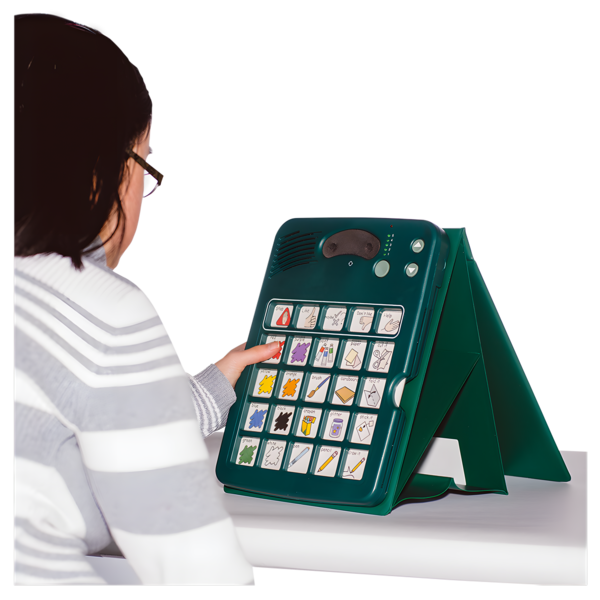
Some AAC systems are electronic and need power from a battery or mains supply. These devices use advanced hardware and software that help people communicate by generating speech. Some high tech AAC systems include:
Dedicated Devices: These are specifically designed to be solely for communication and do not have other apps on them. They typically work by a person pressing a word on the device, and the device will ‘speak’ the message. Some devices will also ‘speak’ pre-programmed sentences.
Non-dedicated Devices: These use standard technology such as Ipads or tablets and will use a specialist communication app. They also typically work by a person pressing a word on the device, and the Ipad or Tablet will ‘speak’ the message.
For some people, pressing the words on the screen is not always possible. For this reason, multiple access methods are available to help people use the device. Some access methods include:
- Eye-Gaze: This method uses eye movements to move the mouse and select options.
- Head-tracking: Usually worn on the head or glasses, this method uses head movements to navigate the screen and select options.
- Switches/ Joysticks: This method typically is an alternative to a standard mouse and is pressed or moved when the person wishes to select an option.
- Scanning: The curser will automatically move across the screen and the person will either press a switch or verbally indicate their desired vocabulary.
Assessment
Once a referral has been made, a Speech and Language Therapist will complete an assessment to identify the best communication system for the person. The assessment will involve evaluating the individual’s needs, skills and environment to work out the best fit. The assessment will also involve a detailed case history, physical and language evaluations and will then explore and try different communication tools like picture boards, high- tech devices or signing. The goal of the assessment is to find a system that works best for the person in all environments.
Implementation
If a method of AAC is agreed, the Speech and Language Therapist will develop this and produce visuals, or work with specialists to order a high tech AAC device. The Speech and Language Therapist will also support the client and their communication partners to begin using the communication system. Support from communication partners is vital in order to help the person learn how to use the system effectively and functionally. The Speech and Language Therapist will support communication partners in modelling the communication system to the person, and suggesting environments and circumstances in which the communication system can be used.
The Speech and Language Therapist will visit and monitor regularly throughout implementation of the communication system to ensure the client is managing and is supported to learn how to use their new communication system.