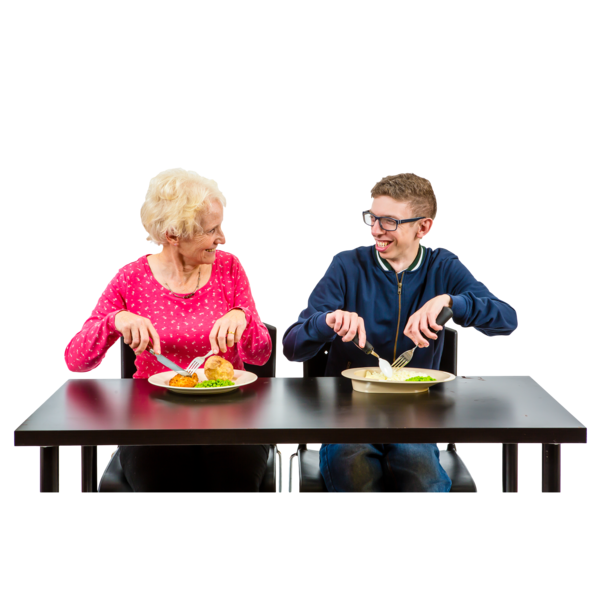
Dysphagia means problems with eating, drinking and swallowing.
There are lots of reason why someone might find it harder to eat, drink or swallow
Muscles might be weak, or someone may be missing teeth.
Posture can play a part in eating and drinking; someone might not be able to sit up well enough to eat.
How can we help?
Speech and language therapists can help with eating, drinking and swallowing.
An SLT will talk to an individual and their family / carers about what food or drink they are finding difficult. From here, the SLT will arrange to observe the individual having something to eat and drink, either in person or over video.
The SLT will discuss what is making eating and drinking difficult and discuss how we can help, using different strategies and making recommendations.
What will happen at an assessment?
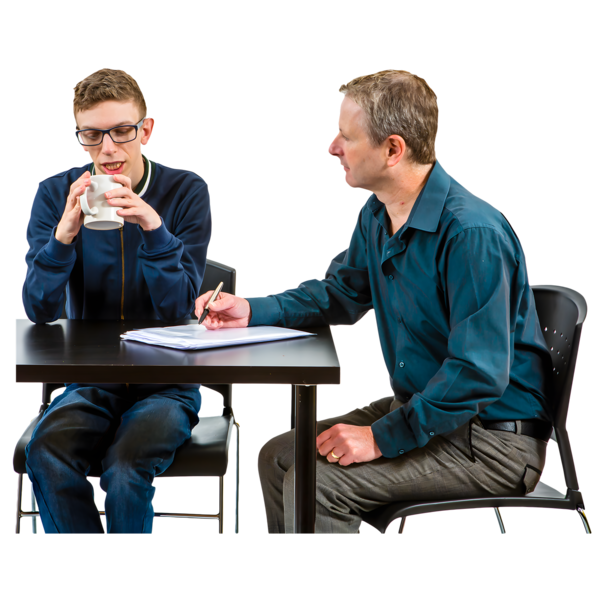
An SLT will observe the individual having something to eat or drink either in person or over video.
The SLT will look out for signs that someone is having difficulty and ask the individual / carers if this is typical for them.
The SLT will give recommendations to the individual/ carers and leave information.
Staff may be asked to fill out recording sheets to monitor how the individual is getting on with eating and drinking.
The SLT will complete any onward referrals if necessary.
Following assessment, a report will be written with formal recommendations for the individual.
Signs of potential difficulty:
A choking incident
Coughing when eating or drinking
A change in facial colour when eating or drinking
Watery eyes when eating or drinking
Gurgle sounds during or after eating or drinking
Weight loss
Dehydration can also be a sign of a difficulty with eating or drinking